“Incubator and venture studio”: building differently at Build Up Labs
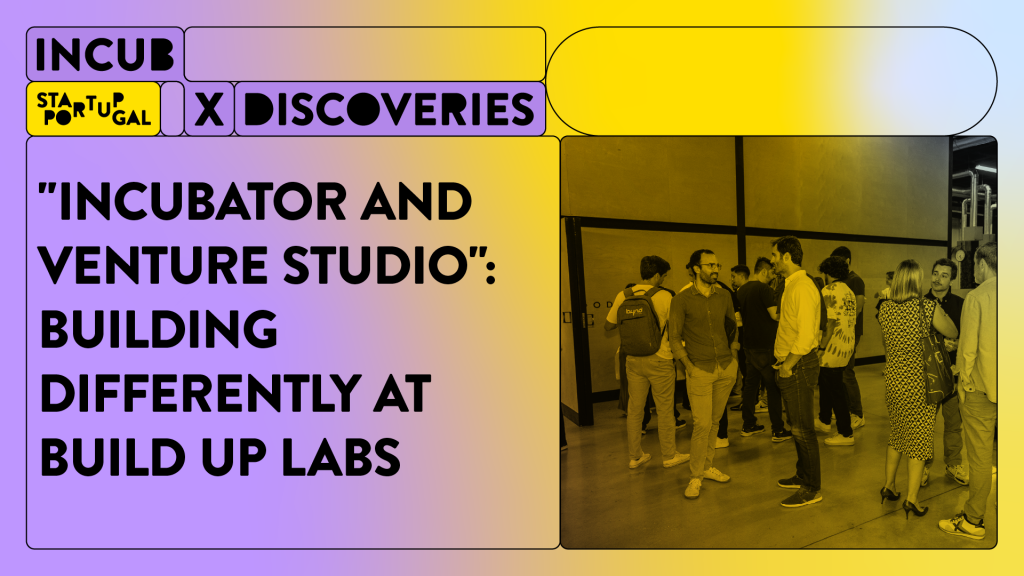
In this edition of #IncubXdiscoveries, we discover Build Up Labs, an incubator and venture studio that builds its own startups as well as supporting others. We spoke with Rui Gouveia, CEO of Build Up Labs, about combining both models, the move toward an AI-native strategy, and what it takes to help founders decide better and move faster.
This content is available in Portuguese.
– How did Build Up Labs come about? What kind of projects do you incubate?
Build Up Labs started as a venture studio, creating its own products and startups from ideas generated by the in-house team. That experience gave us very concrete knowledge about what it means to validate an opportunity, build a product, reach the market, form a team, and deal with the inevitable setbacks of the entrepreneurial path.
In 2020, we also created the incubator to share that knowledge, the methodologies, and the network of investors, experts, corporates, and partners we had built over time. Today, we mainly incubate tech startups and digital businesses, spanning 24 nationalities, with global ambition. We support founders from validating the problem and the value proposition through to product, go-to-market, fundraising, and internationalization.
– Do you have an area of specialization?
Our main specialization is digital businesses and software, with a particular focus on AI solutions. We have specific experience in artificial intelligence, SaaS models, go-to-market, and fundraising.
The coexistence of an incubator and a venture studio gives us an uncommon perspective. We know how to support founders who bring their own vision, but we also know from direct experience what it takes to build a company, make decisions with incomplete information, and maintain operational discipline over the long term.
– What does your incubation model look like?
The model is personalized and execution-oriented. We start by understanding each startup’s stage, goals, and main risks. From there, we set priorities and connect the team to our internal capabilities, external mentors, partners, and other resources it genuinely needs.
Since we don’t work in batches or cohorts, rather than applying the same program to everyone, we look to identify the next milestone that reduces risk and creates real progress. Community is part of the model: peer learning and the proximity of founders, experts, and partners make it possible to solve problems faster and in context.
– Tell us the story of a startup that has left a mark on the incubator. And where did incubating with you make the difference?
There are two trajectories that illustrate different paths of evolution well. DIG-IN joined the incubator in 2023 and evolved from running Zomato’s operation in Portugal into a B2B company in FoodTech, data, and artificial intelligence for the HoReCa sector, validating international expansion through pilots in Spain, Germany, and Brazil.
Intuitivo, incubated since 2021, built an EdTech platform that helps teachers create, grade, and manage assessments. Its path included taking part in Techstars, winning Web Summit, fast adoption by teachers and schools, and a contract tied to the digitization of national exams in Portugal, alongside the development of AI features and international expansion.
In both cases, Build Up Labs contributed at different moments with product and go-to-market discussion, fundraising preparation, access to investors, applications for grants, AI strategy, team design, and internationalization.
The credit for execution belongs to the founders; our role was to help them test decisions, open relevant doors, and move forward with more context and focus.
– Failure is also part of the journey. What is the biggest lesson from something that did not go well?
In entrepreneurship, failure is the most likely outcome. Our main lesson was that we can’t eliminate that uncertainty, but we can avoid recurring and overly costly mistakes.
We also learned that persistence doesn’t mean insisting on the same direction when the evidence points elsewhere. You need to know how to pivot, test early, and turn each hypothesis into a short learning cycle. And before the pressure builds, it’s essential to align the cofounders on ambition, roles, equity, and ways of working.
Our experience as founders and as an incubator has taught us that understanding the market, being able to adapt, and ensuring alignment within the founding team matter more than the initial quality of the idea.
– What makes your incubator stand out? In other words, what do you have that helps startups succeed?
What sets us apart is the combination of an incubator mindset and venture-building capability. We don’t just advise: we understand the work of turning an opportunity into a product, a team, and a business. That real experience within our team allows for very concrete conversations about priorities, trade-offs, and execution.
We support each startup according to its context, mobilizing skills in product, technology, marketing, sales, and fundraising when they make a difference. At the same time, we connect founders to a national and international community of entrepreneurs, mentors, partners, and investors. The goal is to increase the founding team’s capacity to make better decisions and move forward with greater speed and clarity.
– What kind of projects or startups are you looking for right now?
We look for founders with domain knowledge of the problem they’re solving, willing to test their assumptions and open to working closely with our team and the community. The best fit tends to be between the idea stage and pre-series A, when there are still important decisions to make about product, market, and business model.
We are particularly interested in AI-native startups that are reinventing existing solutions, where artificial intelligence is part of the product and the operating model from the start, rather than just a feature added later.
– Community is one of the factors that distinguishes an incubator from an office center. How do you nurture yours, and what plans do you have to make it more cohesive and fertile?
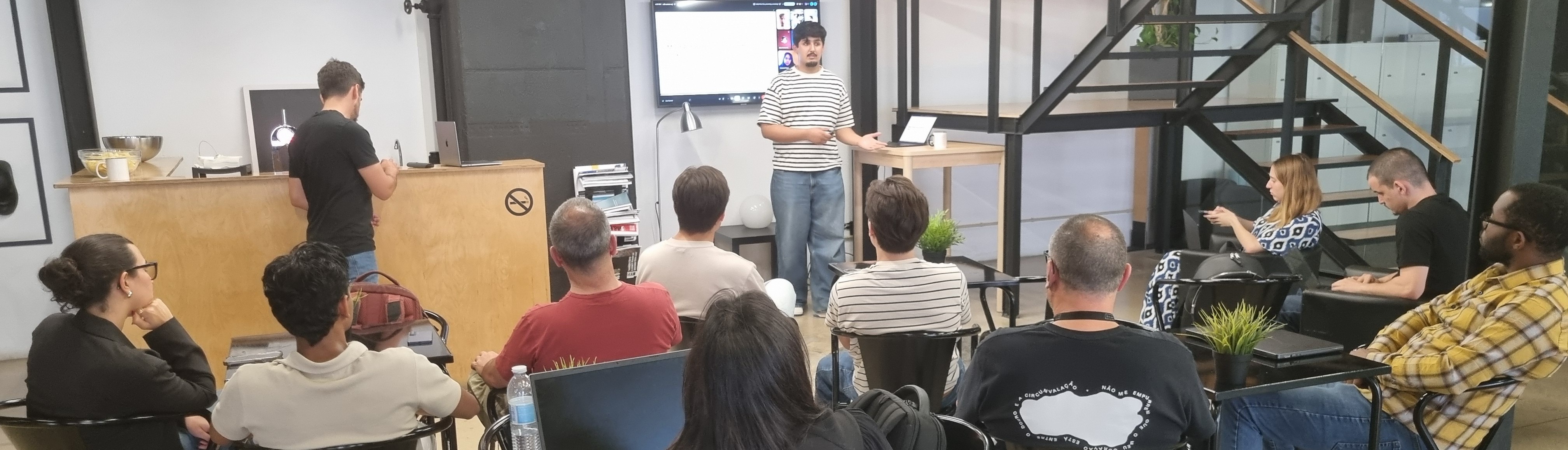
One of our key moments is the monthly Founders Meetup, where we invite a partner to talk with the community about a specific topic. We aim for each meetup to produce practical learning, peer discussion, and relationships that can continue beyond the session, rather than generic networking. Drinks and snacks are on the house.
We complement these gatherings with regular follow-up, sharing of opportunities, and relevant introductions between founders, mentors, and partners. We want to make this network increasingly intentional, bringing together people who face similar challenges or even encouraging partnerships between the incubated startups, while respecting the limited time of those who are building a company.
– What are the main challenges for incubation in your specific context?
One of the biggest challenges for the startups we support is securing the first external investment, the first ticket, typically between €25K and €75K. It’s often the hardest investment to raise, because the company still has limited traction, yet investors are looking for exactly the market proof, the team, and the metrics that this capital would help build. It’s a chicken-and-egg problem.
The incubator’s role is to help founders close that gap. We work on the narrative, the model, the metrics, the data room, and meeting preparation, we help identify the type of investor suited to the stage, and we make introductions when there’s alignment. We don’t promise funding; we help teams become more investment-ready and reach the right people with a stronger proposition.
– Would you like to share any news with us? Any event or initiative we should all have on our calendars?
Our main piece of news is the move toward an AI-native strategy, both in the kind of companies we want to support and in the way we work ourselves. Rachel is one expression of that strategy: Build Up Labs’ AI assistant supports our team and the incubated startups with contextualized follow-up, discovery of opportunities, perks and resources, operational coordination, research, and faster access to useful information. AI frees up time for the added value that comes from personalized mentoring sessions.
In parallel, we have made Startup Tools publicly available, practical and free tools we developed to support concrete decisions along the entrepreneurial path: https://startuptools.builduplabs.com/. It includes Founder Opportunities, a searchable database of grants, pilots, events, and networking; a calculator for equity distribution between cofounders; fundraising and unit-economics funnel simulators; an idea-validation framework; and an AI marketing assistant.
By the end of the year, we will also launch a Marketplace to help startups find their first customers or create commercial partnerships with other startups to reach new market segments. More news soon.
ABOUT #INCUBXDISCOVERIES
#IncubXdiscoveries is Startup Portugal’s monthly feature that will help you discover Portuguese incubators. What projects they incubate, how they manage their community and what success stories they’ve had and future projects are some of the topics covered in these interviews.
If you’d like to find out more about Build Up Labs, either because you’d like to see your project incubated in this region or because you’d like to establish a partnership, contact the Startup Portugal team at incubadoras@startupportugal.com.
Other blog posts